

Care & Maintenance
Care & Maintenance
Your flooring is a long-term investment that adds beauty, comfort, and value to your home or commercial space. To keep it looking its best and performing well for years to come, regular care and maintenance are essential. Each type of flooring—whether hardwood, laminate, vinyl, tile, or carpet—has unique characteristics and cleaning requirements. Understanding these specifics not only enhances the appearance of your floors but also helps extend their lifespan and preserve manufacturer warranties.
This guide provides general maintenance tips and best practices tailored to various flooring types, including daily upkeep, seasonal care, and advice on preventing damage. Whether you're tackling daily dirt or preparing for deep cleaning, you'll find practical solutions to maintain your floors in top condition.
Let’s explore how to protect your flooring investment and keep every step in your space safe, clean, and beautiful.
Your new area rug’s quality fibre provides exceptional wear, and the fine detail makes it beautiful. But remember, no rug will last without special care.
Keep a good rug in a low-traffic area. If the rug is in a traffic area, rotate it every year so it wears evenly. Removing dry dirt is critical. The dirt acts like sand paper and wears away the fibre.
Keep your rug out of direct sunlight. Sunlight, especially ultraviolet rays, can do more than fade colours. UV rays actually breakdown the fibers at a molecular level and they become brittle and break.
Vacuum weekly. On a cut pile area rug, use a vacuum with a rotating beater bar to agitate the carpet pile and loosen dirt for removal. On loop pile area rugs, use a vacuum with suction only to avoid damaging the loops.
Quality area rug pad can extend the life of your area rug. Use plastic guards under furniture legs, and periodically move the furniture around to change the pressure points on a rug.
A prize rug can also be hung on the wall. Sew a long, narrow fabric pocket and hand stitch it to the back of one end of the rug. Slide a rod through the pocket and attach the rod to wall hardware. The full-length pocket will distribute the rug’s weight evenly.
Repairs to the fringes and edges, which tend to wear first, should be attended to promptly to stop knots from unraveling.
When the appearance of your rug is no longer acceptable to your eye, that’s when you clean it. Do not have your rug steam cleaned. Your rug deserves a specialist. Area rugs are washed with a fine spray of mild shampoo and water, flushed with water to rinse, gently passed through a ringer, and finally hung in a temperature and humidity controlled room to dry quickly.
When you get your rug cleaned ask the cleaner if they have a “beater”. This is a mechanized method of hitting the back of the rug with straps in order to remove as much dirt as possible before the rug gets wet. If they don’t have a “beater” insist on a thorough vacuuming on both sides before the rug is cleaned.
If you must store your rug, don't fold it. Roll it up against the nap, consider adding a few moth balls for extended storage, and avoid humid basements. Moths, silverfish and carpet beetles can destroy a rug left undisturbed.
With some loving care, your Area Rug will age gracefully and stay beautiful for years.
Care & Maintenance for Carpets
YOUR NEW FLOORING. In the months following installation, you may notice some common characteristics. These are normal and will not affect the carpet’s life or beauty in any way.
Shedding (loose fibers). This is normal and subsides within a short time with vacuuming.
Sprouting. A single tuft extending beyond the carpet surface, usually along walls or at the seams . Simply cut it off– do not pull.
Pile Reversal and Shading. Describes what seems to be a colour change in various parts of the carpet. The same area may appear light when viewed from one direction and dark from another. This is caused by light being reflected in different ways as pile is bent in various directions. This is not a product defect, but rather a characteristic of plush carpet.
Buckling and Wrinkling. May sometimes occur in wall-to-wall carpet installations. If the ripples persist call United Floors, as it may be necessary to professionally re-stretch the carpet.
CLEANING METHODS:
Cleaning Method A
Blot excess stain or liquid. Soak with lukewarm water one minute and blot with sponge or paper towel. Repeat until no stain is evident on towel or sponge. If stain persists, use a recommended spot cleaner and press into stained area with fingers. Blot excess, rinse with clear, lukewarm water to remove detergent and blot dry. If stain persists, add water again, fold paper toweling and place over stain with weight. Check toweling every five minutes, or until blotter is stain free (this procedure may need to be repeated with deep stains). Brush up pile and allow to dry before walking or carpet.
Cleaning Method B
Blot excess stain or liquid. Soak with lukewarm water one minute and blot. Apply hydrogen peroxide, immediately follow with household ammonia and blot. Rinse with water and blot. If stain persists, follow guidelines 4-6 of Method A
Cleaning Method C
Blot or scrape off excess stain or liquid. Vacuum particles and soften stain with alcohol or dry cleaning solvent. Blot and brush off any remaining particles. Apply alcohol or dry cleaning solvent and blot immediately. If stain persists, follow guidelines 4-6 of Method A.
Cleaning Method D
Blot excess stain or liquid. Wet stain with alcohol or dry cleaning solvent and blot dry immediately. Repeat two times. If stain persists, follow guidelines 4-6 of Method A.
Cleaning Method E
Blot to remove excess stain or liquid. Rinse with clear, lukewarm water and blot dry. If cleaning method fails to remove stain, have affected area replaced (plugged) by professionals.
Cleaning Method F
Allow area to dry and vacuum excess. Soak with lukewarm water for one minute and blot with sponge or paper towel, repeat until no stain is evident on towel or sponge. If stain persists, follow guidelines 4-6 of Method A.
Cleaning Method G
Blot excess. Apply nail polish remover and blot immediately. Repeat until no stain is evident on blotter. Brush up pile and allow to dry before walking on carpet.
Cleaning Method H
Scrape off excess. Soften stain with vinegar and blot with lukewarm water. Repeat until no stain is evident on blotter. If stain persists, follow guidelines 4-6 of Method A.
Recommended Procedures for Stain Removal
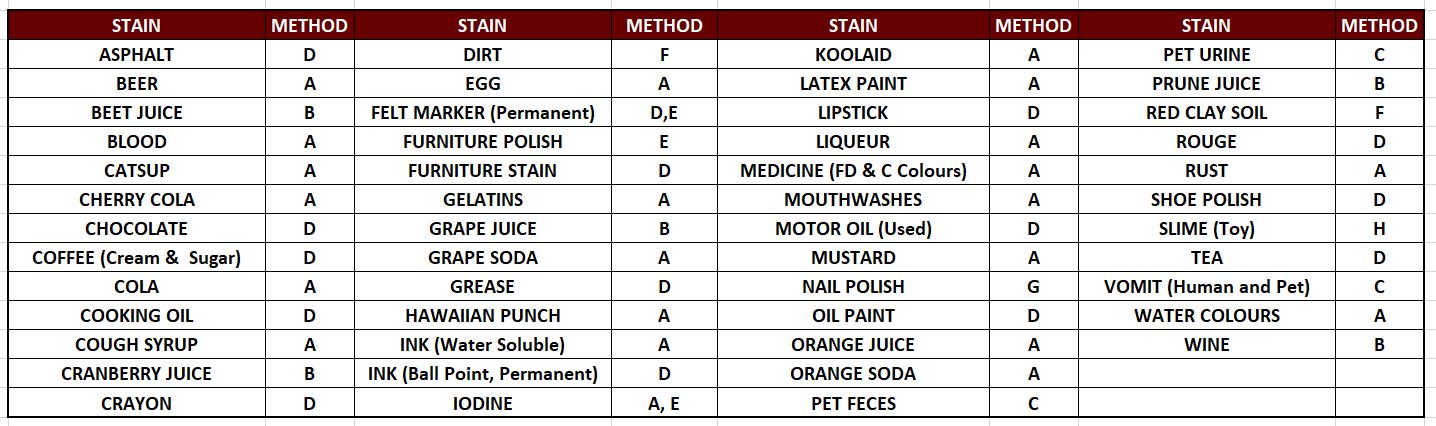
To help prolong the life and appearance of your new carpet, try these common-sense solutions:
Vacuum your carpet often. You cannot hurt it by vacuuming too much. Use walk-off mats at all entrances.
Protect your carpet from strong sunlight by using blinds, shades or other window treatments.
Use furniture coasters under heavy furniture legs. When vacuuming , move your furniture an inch or more from it’s original position to prevent excessive crushing of the carpet pile.
Use protective mats under chairs or furniture with rollers to protect the carpet and the cushion.
Blot up a spill as soon as it occurs whenever possible.
Rearranging your furniture periodically, changes the traffic pattern and allows the carpet to wear more evenly.
While good vacuuming habits and do-it-yourself cleaning methods are very effective for dry soil and dirt, oily soil from cooking vapors, air pollution and grease tracked in from outside presents different problems, and can cause fiber damage and significant dulling of colours. It’s not that your colour is lost– it’s just under a film buildup, and the pile has matted together.
Professional carpet cleaners can keep your carpet fresher, brighter and newer looking longer. They can also replace missing tufts and repair cigarette burns. Many professional carpet cleaners are attending classes and passing written examinations to become certified to clean stain resistant carpets. It’ is best to choose one with this certification.
To protect the stain efficacy of the carpet, no disinfectants, insecticides, biocides or fungicides should be used on carpet.
The pH (relative acidity or alkalinity of the detergent should not be above 10. A very alkaline detergent cleans well, but it can also degrade the stain resistance of the carpet.
Aerosol foam cleaners are NOT recommended, nor is a rotary brush.
PLEASE NOTE: the use of any topical treatment other than those recommended by the carpet manufacturer may VOID your stain warranty.
UNGLAZED PORCELAIN CERAMIC FLOOR TILE
This type of tile is very dense, non-porous and slip-resistant compared to other tile. The tile body is the working surface of the tile, as there is no glaze or coating. This type of surface finish is not as smooth as a glazed tile and may benefit from a sealer treatment prior to putting the tile into service.
Maintenance
Use soft bristle brushes or scrubbing pads as opposed to simple mopping or wiping. Combine scrubbing with an effective cleaner designed for unglazed tile or stone. Rinse and allow to dry.
Cleaning Products
To avoid residue problems, use a recommended cleaner like Masterpiece Stone Soap. To achieve a sheen, you can leave a small amount of Masterpiece Stone soap residue on your floor and buff with a clean, white polishing pad or soft bristle brush. Not recommended for polished tiles.
High Gloss finishes
Are not normally used on unglazed tile, however, a quarry polish could be used when a high gloss is desired.
Note: Glossy finishes normally require more maintenance than natural finishes.
Not recommended for polished tile.
GLAZED FLOOR TILE
This type of tile is very durable, non-porous and non-absorbent.
Maintenance
Is typically limited to: Sweeping, vacuuming or dust mopping regularly in order to minimize abrasive soils. Damp mop or wash on a needed basis.
Cleaning Products
Cleaning product residue can dull the appearance of the floor, attract soils, increase scuffing, and/or causing tracking. To avoid problems, use recommended cleaning products.
Use Clean Water and Rinse often
It is very important to change both wash water and rinse water often to prevent dullness, due to mop water residues. Dry buff-polish tile with a clean, dry cloth or pad.
Glossy floor finishes
Are not suitable nor recommended for glazed floor tile.
Beauty, Durability and Comfort
Cork is one of the most beautiful and sensuous flooring materials today– its rugged, resists scuffs and stains, and its textured pattern disguises dust. It’s a good choice for high-traffic areas, kitchens and other task rooms in which you stand for long periods of time, because cork is very comfortable under foot. Following a few simple suggestions will help keep your new cork floor looking great for years to come.
Easy Care Maintenance, Dust-mop, sweep or vacuum regularly to remove loose soil and fine dust particles.
For sealed cork tiles; use a recommended liquid floor cleaner followed by a non-slip wax polish and buff clean.
For non-sealed cork tiles; use a recommended liquid floor cleaner. Wipe up spills quickly with cloth or sponge. Avoid excessive water.
Ideally, cork tiles should be sealed, using the manufacturer dressing or sealer.
Never use a scouring powder, highly acidic or alkaline cleaners, non-recommended commercial cleaners or polishes, or a treated mop that has been used to clean other floors or furniture.
PROTECT YOUR CORK FLOOR
Cork floor dressing/sealer is recommended. Apply one coat, once per year or as required by traffic (follow manufacturer instructions)
Seventy to 80% of dirt on the floors in your home is tracked in from the outside. Use entry-way (non-skid, cotton) mats to capture tracked-in dirt and soil, and clean them regularly. Rubber or fibre-backed mats may stain or scratch floor finish.
Use Felt floor protector pads under furniture legs and protect your floor from hard castors on moveable furniture.
Use caution when wearing high heels. High heels can cause permanent indentations in floor surfaces.
Damage Repair
Minor Damage
Use a coarse grade sand paper wrapped around a block to remove the damaged area. Then use a fine grade sand paper to smooth the area. Once the area has been cleared of dust, re-seal with a manufacturer recommended floor sealer.
Major Repairs
Your United Floors retailer can recommend the assistance of a professional to either repair or replace the damaged tile.
An Investment in Beauty
From great castles to country cottages, wood has for centuries been the material of choice for beautiful, durable floors. Today, hardwood floors are considered a perfect complement to any décor-traditional, colonial, or contemporary. Wood’s resiliency makes it a logical choice for kitchens and workrooms, while it’s heat retention makes it ideal for family rooms and bedrooms. Hard wearing wood is also an extremely practical floor surface for areas with heavy traffic, such as entries and hallways. The beauty of wood also adds charm to any living or dining room.
For all these reasons, wood is enjoying a renaissance of interest among homeowners and commercial designers alike.
Easy Upkeep
In the past, homeowners often equated wood flooring with hard work: difficult waxing and buffing were needed to keep wood floors in high-gloss condition. Today, polyurethane and other surface finishes have been introduced that leave a tough, easy care, moisture resistant surface which protects wood floors from spills and stains.
An Investment That Appreciates
A wood floor can be an asset that continually appreciates. While carpeting will need replacement every 7-10 years, a wood floor will last the life of a house, with proper care. Wood floors are often equated with quality and can add to the resale value of your home. The most important reason to invest in wood however, is to enjoy the lasting beauty.
THINGS YOU SHOULD KNOW ABOUT HARDWOOD FLOORS
Wood, as a natural product, varies from piece to piece. It is not fabricated– it is milled from a tree and will have grain and color variations consistent with the grade and species of flooring selected. The grade of wood is determined according to the National Oak Flooring Manufacturers Association Standards. Do not expect a monochromatic floor.
Do not expect a floor without cracks between the boards, or within the parquet pieces. Although your new floor may start tight together, as a natural product, it will continue to absorb and release moisture. This natural process will cause the flooring to expand and contract from season to season– resulting in cracks between some of the pieces in your floor. Some stain colours, such as white, will show this process more than others.
Your wood floor will never be duplicated. Every wood floor is truly unique.
YOUR NEW FLOORING
A hardwood floor will last a lifetime if properly maintained. The stain resistant, water resistant urethane finish helps keep spills from ever touching the wood surface, so most problems can be prevented by following a few simple procedures. As with any floor covering material, a few moments of care can go a long way in keeping your new hardwood floor looking its best.
Never clean with water. Do not use soaps, detergents, “oil soaps” or maintenance products intended for other flooring surfaces. Use the manufacturers recommended floor care products (available at your United Floors store). They have been specially formulated to help keep your hardwood floor looking its best.
Sweep or Vacuum. The factory applied polyurethane finish on your hardwood floor is very tough, but loose dirt and grit (sand and small stones) can scratch it. Sweep or vacuum as often as required.
Wipe up spills as soon as possible. Wipe up spills with a damp cloth (wring the cloth as dry as possible). Remove dried spills with a cloth or scrub pad dampened with the hardwood manufacturers cleaners.
Never Wax your hardwood floor. If the polyurethane finish becomes dull over time, renew it by re-coating with a good quality, non-yellowing polyurethane finish. By re-coating periodically, your floor will always look great and should never require sanding.
To help prolong the life and appearance of your hardwood floor, try these common-sense solutions:
Use Area Rug. To prevent dirt and moisture from being tracked onto your hardwood floor, you may want to add an area rug. Don’t use rubber, foam back or plastic mats as they may discolour the floor. To prevent slippage of area rugs, use an approved under cushion. Use outdoor mats at the entrances of exterior doors to keep dirt and moisture from being tracked inside.
Use Proper Protection. Place proper felt floor protectors under the feet of furniture and keep them clean to avoid scratching. When moving heavy furniture, use a blanket or carpet (face down) under the furniture and slide it carefully to avoid scratching and gouging.
Avoid walking on your hardwood floor in high heels. In spite of the term “hardwood”, your floor can be damaged by high heels. Because of the extremely high compressive forces they generate, high heels (especially heels in disrepair) can cause denting and related damage to your hardwood floor. The polyurethane finish that is applied, although extremely tough, will not prevent this.
Use Humidity Control. Wood will expand and contract significantly with changes in temperature and humidity. We highly recommend the use of humidity control for all areas where wood flooring is installed.
Recommended Procedures for Stain Removal
| Stain | Cleaning Method |
| Coffee, Tea, Chocolate, Soft drink, Juice |
Warm water and a recommended cleaner
|
| Marking pens, Tar, Ink, Crayon, Oil based Paint, nail polish, liptisk, Grime |
Dampen with a clean rag with mineral spirits, denatured alcohol or acetone (nail polish remover)
|
| Candle wax, Chewing gum |
Allow to harden, then scrape with a dull, blunt blade
|
Damage Repair
Minor Damage
Can often be easily repaired with the Laminate flooring manufacturers repair kits. Kits are available to match the color of your floor.
Major Repairs
Your United Floors retailer can recommend the assistance of a professional to either repair or replace the damaged plank.
LOW MAINTENANCE AND LONG LASTING BEAUTY
Your new laminate flooring is as close to “maintenance free” as a floor can get. Following a few simple suggestions will help keep your laminate flooring looking like new for years to come.
Easy Care Maintenance
Dust-mop (with a non-treated, clean mop) or vacuum regularly to remove loose soil and fine dust particles that can scratch finished floors. Wipe up spills quickly with cloth or sponge. For heavier cleaning, use a recommended cleaner. Avoid excessive water. No wax oil or polish is required.
Never use a scouring powder, steel wool or highly acidic or alkaline cleaners, non-recommended commercial cleaners or polishes, or a treated mop that has been used to clean other floors or furniture on your laminate flooring.
Never sand, wax or lacquer your laminate flooring.
Never drag appliances or heavy furniture across your floor.
Protect your floor
Use entry-way (non-skid, cotton) mats to capture tracked-in dirt and soil, and clean them regularly. Rubber or fibre- backed mats may stain or scratch floor finish. Use Felt floor protector pads under furniture legs and protect your floor from hard castors on moveable furniture.
Care & Maintenance for Vinyl Floors
Today’s vinyl floors are tough, non porous and resistant to normal household spills. They are easily maintained and will always look best with regular care.
Immediately after installation
Do not walk over “seam sealing” for at least 24 hours. This will ensure a proper seam bond. If your seams are disturbed before they’re dry, permanent damage can occur. Keep traffic to a minimum for at least 24 hours after installation. The adhesive under your floor needs time to thoroughly dry after installation. Therefore, we recommend that you do not scrub or wash your floor for five days. Use a damp sponge or cloth to wipe off the vinyl manufacturers logo on the face of the floor. Be careful not to wipe across any seams. Avoid putting heavy furniture and appliances in place for 24 hours.
Proactive protection for your floor
Move heavy furniture or appliances carefully, lay a plywood panel on your floor and “walk” the items across the floor. Do not push loaded panels across the floor. This protects your floor from scuffing and tears. Furniture legs should be equipped with non-staining large surface casters or furniture cups to reduce indentation. As a general rule of thumb, the heavier the items, the wider the floor protector needed. Be careful with rolling casters. They can damage a floor and therefore are not recommended.
After all cleaning procedures
And when the floor is completely dry, a simple buffing should restore normal luster.
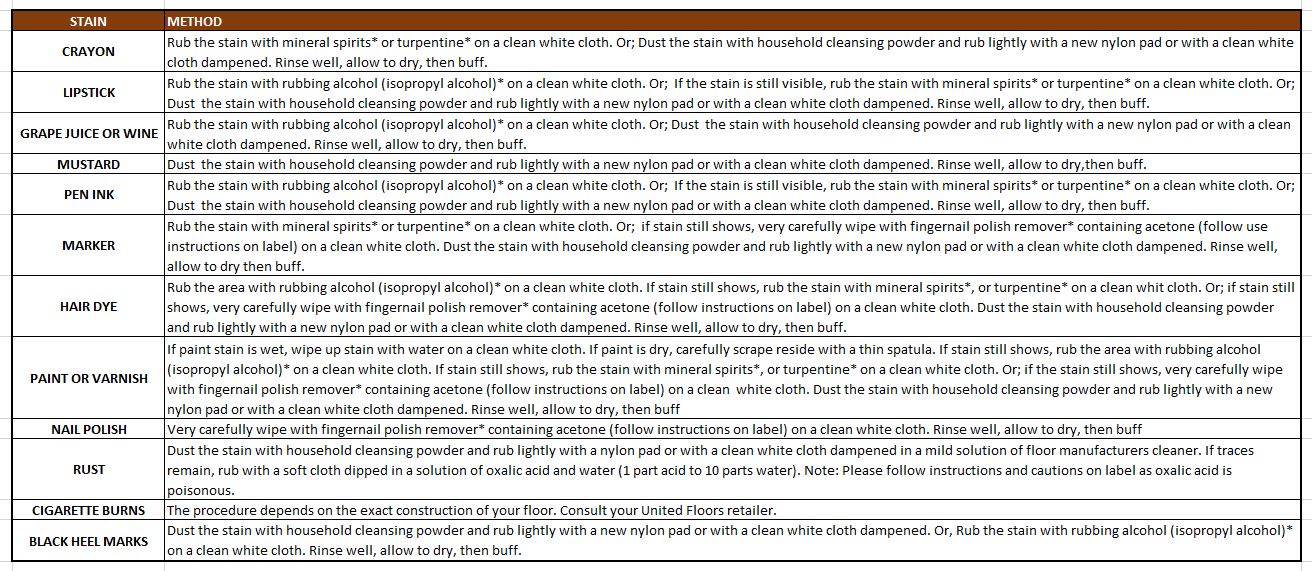
Control tracked in dirt. Dirt has an abrasive effect which lessens the original appearance of the floor. The simplest way to reduce the amount of dirt brought into your home is the use of door mats at entrances. Do not use mats with rubber or latex backing, as they can cause permanent discoloration.
Footwear and heels can mark floors. It’s a good idea to check the soles of footwear in the household as the marks they make can be unattractive and are sometimes hard to remove. High heels can cause dents and damage to vinyl flooring.
Avoid extreme sunlight. Normal and moderate sunlight will not affect your vinyl floor. However, extreme exposure to the sun rays through sliding glass doors must be avoided. Draw your drapes or shades during periods of peak sun exposure.
Sweep or vacuum regularly. Loose dirt can scratch your floor. Do not use the vacuum beater bar or vinyl floors, since it can visibly damage your flooring surface.
Wipe up spills promptly. Do not let spills set. Blot up with a paper towel and then wipe with a clean, white dampened cloth. See stain chart instructions for removing specific stains.
Wash your floors regularly. Do not flood your floor. Apply the recommended cleaner with a sponge mop. After the soil has been loosened from the floor, mop up thoroughly.. If cleaner is left, the floor may become sticky, attract dirt and appear dull. If this occurs, rinse with clean water and remove the water using a “rinse only” sponge mop, frequently wrung out. Allow for the floor to dry before traffic is resumed.
NOTE: Do not use dish detergents or vinegar and water, abrasive cleaners and cleaners containing solvent.
